A fleeting cubic form of bismuth vanadate
Heating well-defined vanadium, bismuth and zinc molecules produces a previously unknown, less dense crystal of BiVO4, and a black amorphous vanadium oxide whose local arrangement resembles reduced oxides even though almost all of the vanadium stays in the +5 oxidation state. The brief stages between a molecule and a finished oxide can be real materials.
The materials that form and then vanish
Bismuth vanadate, BiVO4, is a photoanode: a solid that absorbs light and drives the oxidation of water, a step used in solar-to-fuel devices sometimes called artificial leaves. Vanadium pentoxide, V2O5, is used in oxidation catalysis, battery cathodes, supercapacitors, gas sensors and materials whose colour changes with electricity, heat or light. Both are usually made by heating ingredients until the most stable crystal appears. Phases that form at lower temperature, before that stable oxide, have rarely been examined in detail.
Among roughly 8000 publications on BiVO4, only three crystal forms had been described. The one most often used for photoelectrochemical water oxidation is monoclinic scheelite, written m-BiVO4. Two tetragonal forms also exist: a zircon-type structure and a scheelite-type structure. Adding molybdenum can favour the tetragonal scheelite. The zircon-type phase has a higher band gap, the energy a solid must absorb from light before its electrons can move and do chemistry, and is of interest for type-II heterojunctions, junctions between two semiconductors, because of its high crystal symmetry, or as a photocathode.
High-activity BiVO4 electrodes are often grown from an electroplated bismuth oxyiodide layer and can be improved by adding small amounts of other metals. That electrochemical route is not easily scaled while keeping the solid uniform. Alexandria E. Hands and colleagues therefore followed another route: single-source precursors, molecules that already contain every element the final solid needs. Heating such a molecule can mix those elements evenly, sometimes at lower temperature than a conventional ceramic synthesis, and can reach unusual crystal forms or doping levels.
Three molecules, one heating experiment
The team studied three polyoxovanadates, clusters built from vanadium and oxygen. Compound 1 is the ammonium salt of decavanadate, [NH4]6[V10O28]·6H2O, a bright orange powder containing only vanadium as the metal. On drying under an extended vacuum, about half of its co-crystallised water is lost. Compound 2 is a neutral bismuth–vanadium cluster, [H3Bi4V13O40(DMSO)12]·4(DMSO), in which bismuth ions cap a vanadium–oxygen core and dimethyl sulfoxide, DMSO, is the organic ligand. Compound 3-Zn pairs a chlorinated bismuth–vanadium anion with a zinc cation, [Bi4V12O33Cl(DMSO)12][Zn(DMSO)6]. The vanadium-to-bismuth ratio is 3.25 in compound 2 and 6 in the related chlorinated clusters, higher than the 1:1 ratio in BiVO4, so heating also makes V2O5 as a by-product.
That extra vanadium is there for a reason stated in the paper. A vanadium-rich environment keeps bismuth-rich side phases from forming. In chemical vapour deposition of BiVO4, Bi4V2O11 appears easily, likely because some vanadium leaves as a volatile species. A basic wash can later remove the V2O5 and leave a porous BiVO4 architecture. In earlier films made from the same family of precursors, the zinc-containing material gave the highest photocurrent for water oxidation among the metal dopants tested, but the role of the zinc was not clear.
The solids were followed with solid-state nuclear magnetic resonance, which reads the local environment of vanadium or hydrogen nuclei, with powder X-ray diffraction, which sees long-range crystalline order, and with pair-distribution function analysis, which measures distances between atoms even when the solid is not a crystal. Some samples were heated in the X-ray beam. Others were annealed, cooled, and then measured. Synchrotron patterns of the new bismuth vanadate phase were collected at beamline I15-1 of Diamond Light Source.
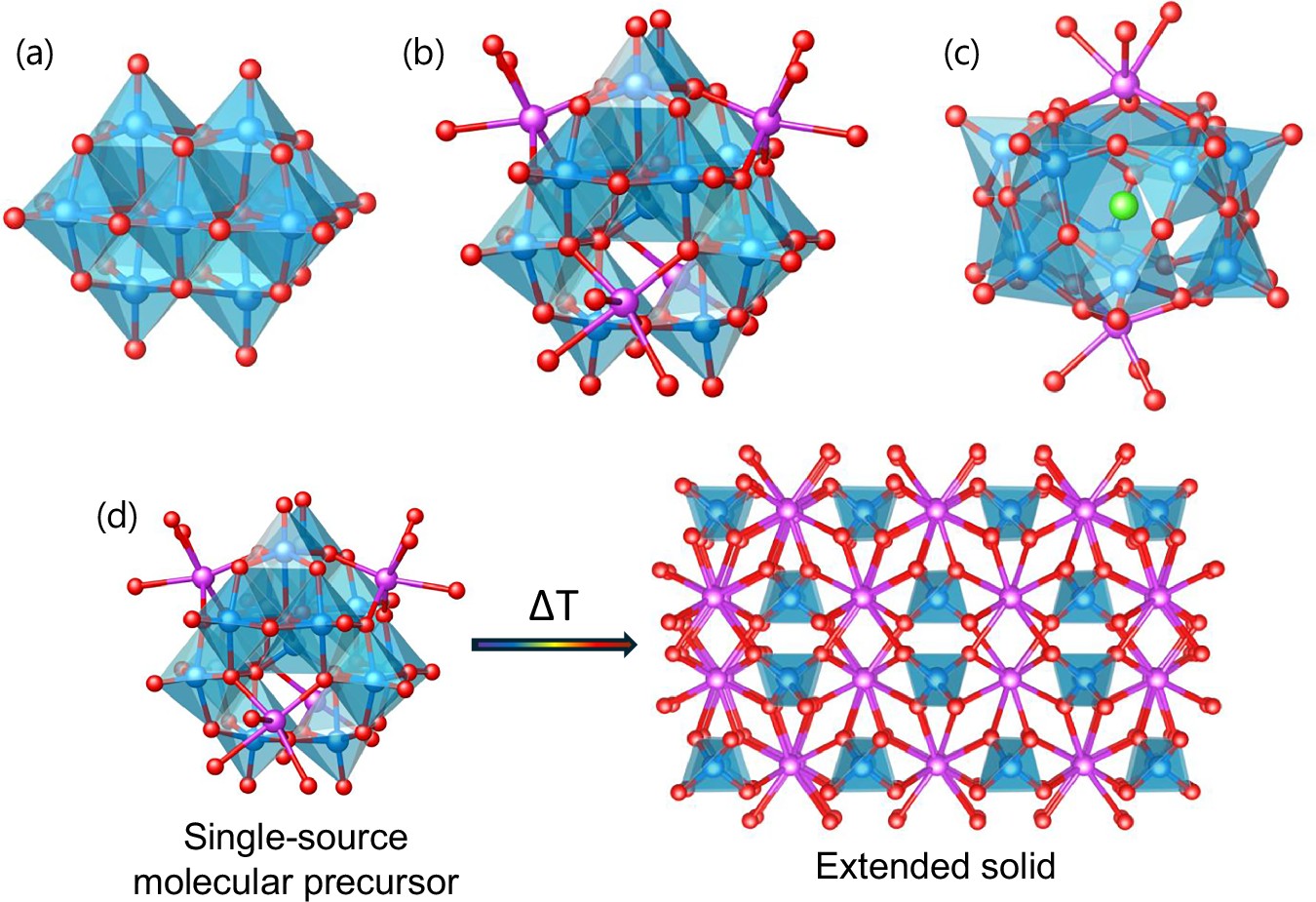
Fig. 1 from Hands et al., Nature Communications, 2026. CC BY 4.0 · licence
A black solid that is barely reduced
Compound 1 loses about 24 percent of its mass by 370 °C. Water and ammonia leave throughout, with extra water between 80 °C and 150 °C. Losing every ammonium ion and every water molecule on the way to V2O5 would account for 22.5 percent, so some vanadium is partly reduced, with some oxide lost as well, or a little vanadium escapes as a volatile compound. Some loss of nitric oxide is also seen. The orange crystals hold until 80 °C, then restructure. By 200 °C the diffraction pattern has collapsed. The powder turns brown after 150 °C, black after 200 °C, and red-brown after 300 °C. There is no carbon in the starting salt, so the black colour is not soot.
At 200 °C the vanadium nuclear magnetic resonance spectrum is a single broad signal at −550 parts per million. Its width is about 40 parts per million, ten times the 4–5 parts per million of the starting crystals, which is what an amorphous solid looks like. Pair-distribution analysis of that black powder fits a local mixture of three arrangements: 50(5) weight percent of a V4O9-like connectivity, 35(4) weight percent of an ammonium vanadium bronze, (NH4)V4O10, and 15(7) weight percent of remaining precursor. The fit residual Rw is 14.8 percent. In crystalline V4O9, half of the vanadium is in the +4 oxidation state. From those weights, about 35 percent of the vanadium might be expected as V(IV).
A double titration of the same black powder, dissolved in 2 M sulfuric acid, found only 2.7 ± 1 percent V(IV). X-ray absorption near the vanadium edge looked almost identical to V2O5, in which vanadium is +5, although that measurement is less sensitive to V(IV) than electron paramagnetic resonance, which still detected some V(IV). The authors read this as an oxygen-rich, kinetically trapped arrangement: the atoms sit in a pattern that resembles reduced vanadium oxides, but most sites are still V(V). Partial reduction is caused by a redox reaction with ammonia given off by the salt. The black colour comes from d–d transitions, jumps of electrons between metal orbitals, and intervalence charge transfer between neighbouring vanadium sites, not from a large inventory of reduced vanadium. By 250 °C, α-V2O5 is growing. Crystallites of the starting powder are about 10 nanometres. The V2O5 crystallites are about 103 nanometres at 250 °C and about 162 nanometres at 600 °C. After 300 °C the vanadium spectrum is a single environment at −615 parts per million, and at 400 °C the pair-distribution fit matches V2O5 with Rw of 12.2 percent.
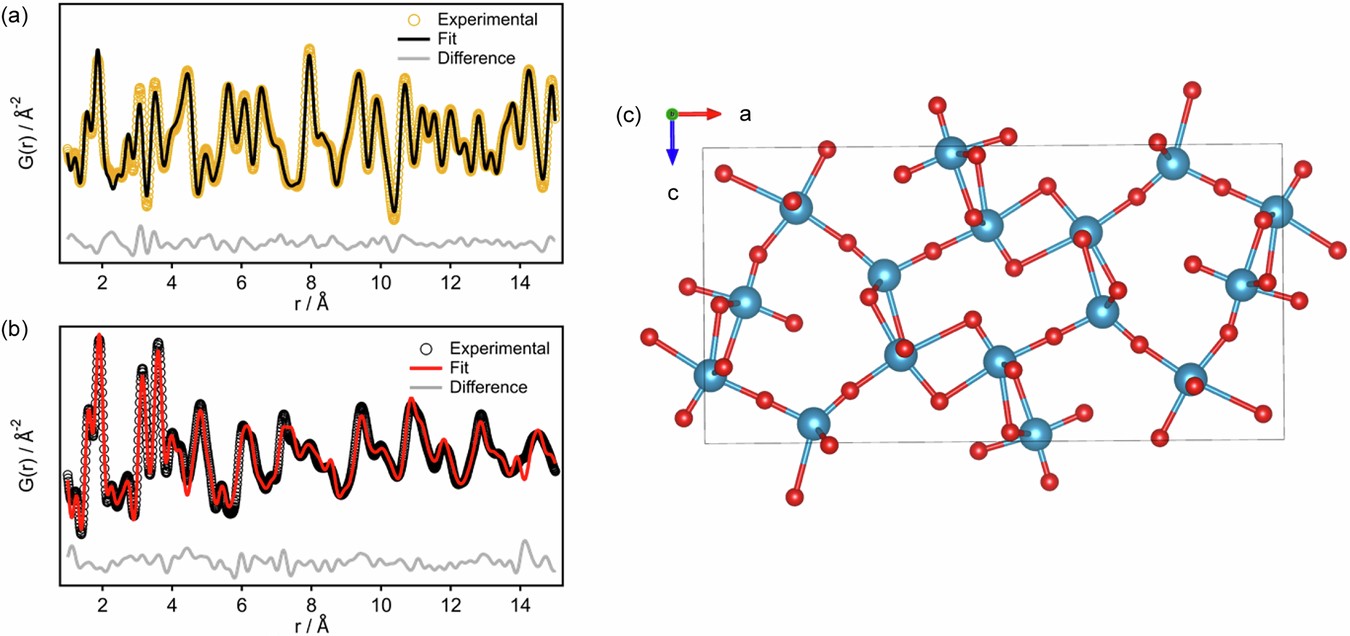
Fig. 3 from Hands et al., Nature Communications, 2026. CC BY 4.0 · licence
A cubic crystal that only exists in a temperature window
Compounds 2 and 3-Zn are red. Above about 175 °C in air they turn black, then green between 400 °C and 480 °C, and finally the orange-yellow of the finished oxides near 550 °C. Completing the mass loss takes about 520 °C for an amorphous form of compound 2 and 600 °C for 3-Zn. The products, after cooling, are m-BiVO4 and V2O5. While the sample is still hot, in-situ diffraction also shows the high-temperature tetragonal scheelite, ts-BiVO4, which converts to the monoclinic form on cooling to room temperature.
Between 350 °C and 420 °C an extra crystalline phase appears in in-situ heated 3-Zn and in ex-situ heated microcrystalline compound 2, then disappears on further heating. It did not match any reported bismuth, vanadium or bismuth–vanadium oxide in the database. Indexing pointed to a primitive cubic cell near 7.03 Å. A Rietveld refinement against the synchrotron pattern, using the known structure of β-SnWO4 but with Bi3+ in place of Sn2+ and V5+ in place of W6+, fitted a cubic crystal in space group P213. The authors name it β-BiVO4 because of that resemblance.
In a sample of 3-Zn annealed to 380 °C and cooled, that refinement gave 25.1(2) weight percent β-BiVO4, 63.1(2) weight percent orthorhombic V2O5, and 11.8(1) weight percent m-BiVO4, with a cell edge of 6.9916(2) Å for the cubic phase. From the unit cells, β-BiVO4 is expected to be less dense, 6.3 grams per cubic centimetre, than m-BiVO4 at 6.8. The structure is a rock-salt-like alternation of Bi3+ and vanadate tetrahedra, VO4^3−. Average V–O distances are 1.62(2) Å, shorter than the 1.69–1.77 Å in other BiVO4 polymorphs. Each bismuth has three short Bi–O contacts at 2.26(1) Å and three long ones at 2.662(5) Å, a distorted octahedron similar to the six-coordinate bismuth in the molecular precursors and unlike the eight-coordinate bismuth in monoclinic or tetragonal BiVO4. The lone electron pair on Bi3+ points toward the base of a vanadate tetrahedron. Allowing the bismuth atoms to sit slightly off the threefold axis, in three closely spaced positions each one-third occupied, improved the fit. Related disorder in lanthanum and praseodymium molybdates is found in oxide-ion conductors, and the authors say the same disorder could matter for photocatalysis or ionic conductivity in β-BiVO4. Those properties were not measured on this phase.
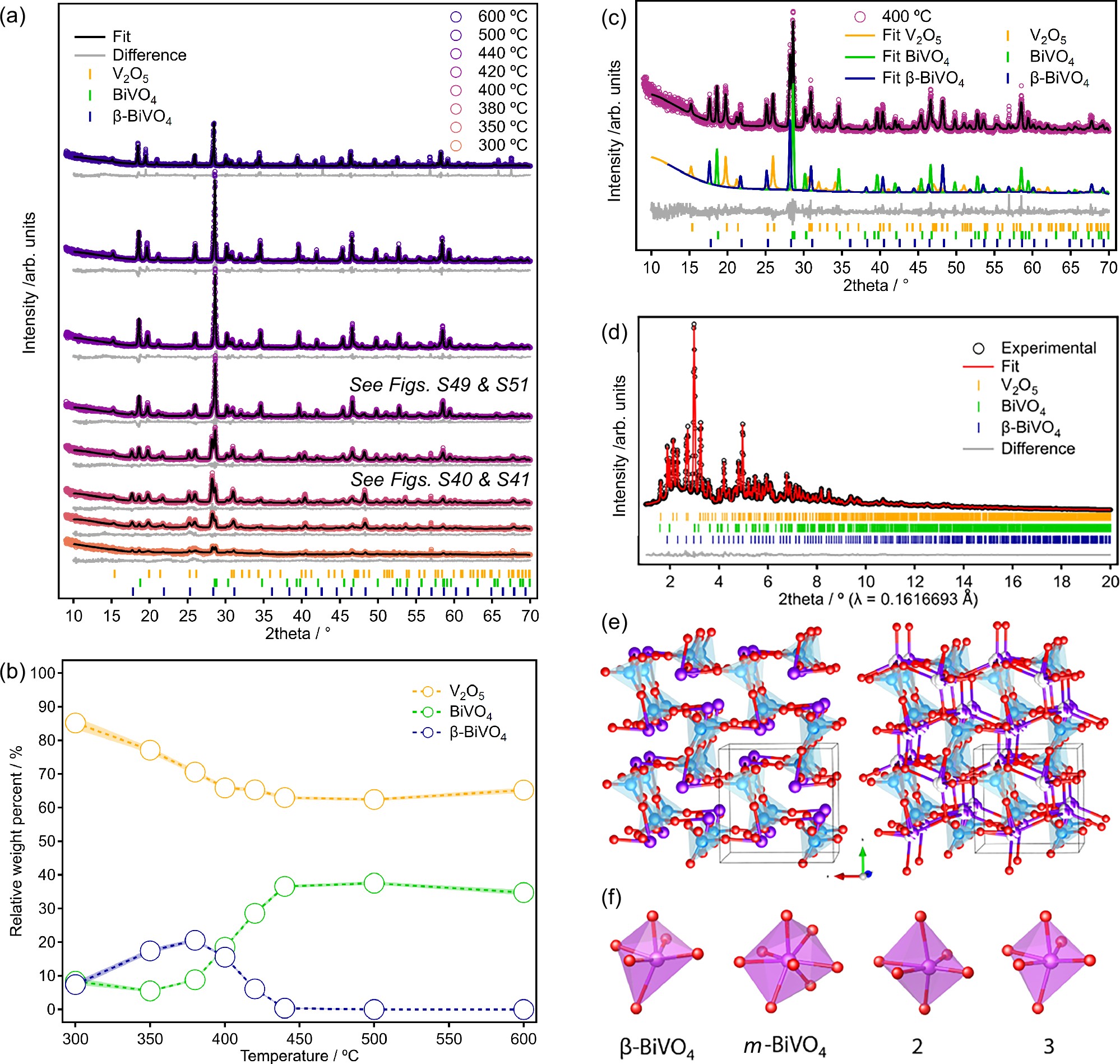
Fig. 6 from Hands et al., Nature Communications, 2026. CC BY 4.0 · licence
What the detour changes, and where it stops
BiVO4 is already an important photoanode for water oxidation, and V2O5 is already used as a battery cathode and an oxidation catalyst. This heating study does not show that β-BiVO4 splits water, or that it outperforms the monoclinic form. What it does show is that a fourth polymorph can be caught if the heating is stopped between 350 °C and 420 °C, and that its bismuth coordination still resembles the molecule it came from. The lone pair on bismuth is less localised than the lone pair on tin in β-SnWO4. The authors say that difference would explain why the denser monoclinic crystal is normally preferred. β-BiVO4 is kinetic in a separate sense: it is present for a while during heating, then lost as the temperature rises.
Sulfur left behind by decomposing DMSO may help hold that phase. Elemental analysis still finds some hydrogen and sulfur at 420 °C in material from the amorphous form of compound 2, and 3-Zn still contains 1 weight percent sulfur after 380 °C. By 600 °C, carbon, hydrogen and sulfur are essentially gone. The abstract also reports that local-structure measurements show zinc dopants entering BiVO4 in a way that depends on temperature. The same abstract says the study explores the electrochemical properties of amorphous mixed-valence vanadium oxides as electrodes for lithium-ion batteries. In the characterisation given for the black 200 °C powder from compound 1, that mixed valence is subtle: the local geometry looks like a reduced oxide, while titration finds only 2.7 ± 1 percent V(IV).
The authors’ own suggestion is methodological. Careful analysis of how a molecular precursor falls apart may be a way to obtain kinetically stabilised polymorphs and amorphous variants that higher-temperature routes miss. They also note, from earlier work, that V2O5–BiVO4 heterojunctions can help photocatalysis, and that releasing vanadium ions into an electrolyte can slow photodegradation of BiVO4. Those are reasons the vanadium-rich precursors were chosen. They are not new device results from this heating study.
Still open
- Does the bismuth disorder in β-BiVO4 produce measurable ionic conductivity or photocatalytic activity, or is that only a structural analogy with lanthanum and praseodymium molybdates?
- How much of the stability of β-BiVO4 comes from residual sulfur left by DMSO, and can the phase be made from a precursor that contains no sulfur?
- Is the black 200 °C powder from compound 1 best treated as a genuine mixed-valence electrode material, given that its local structure resembles reduced oxides while titration finds only 2.7 ± 1 percent V(IV)?